

Larnaca's Property Boom: Rising Prices, New Towers and the Squeeze on Local Buyers
Larnaca has spent decades as the quieter, more affordable member of Cyprus's coastal trio, overshadowed by Limassol's glass towers and Paphos's holiday-home market. That is changing. The district now records some of the fastest property price growth on the island, a wave of seafront tower projects is reshaping the skyline, and a long-planned redevelopment of the port and marina promises to remake the waterfront. For local buyers and tenants, the question is whether the boom leaves room for them.
Prices are rising faster than incomes
According to the Central Bank of Cyprus's Residential Property Price Index, nationwide residential prices accelerated through 2025, from a 4.84% year-on-year rise in the first quarter to 7.06% in the fourth. Apartments led the way, up 9.61% year on year in the fourth quarter, while house prices rose a more modest 3.40%.
Larnaca stood out. Apartment prices in the district climbed roughly 12.2% year on year in the final quarter of 2025, among the strongest performances in Cyprus after Limassol, with house prices up around 4.5%. The Central Bank attributes the trend to sustained demand from both local and foreign buyers, limited new supply, and construction costs that remain historically high.
A skyline of cranes
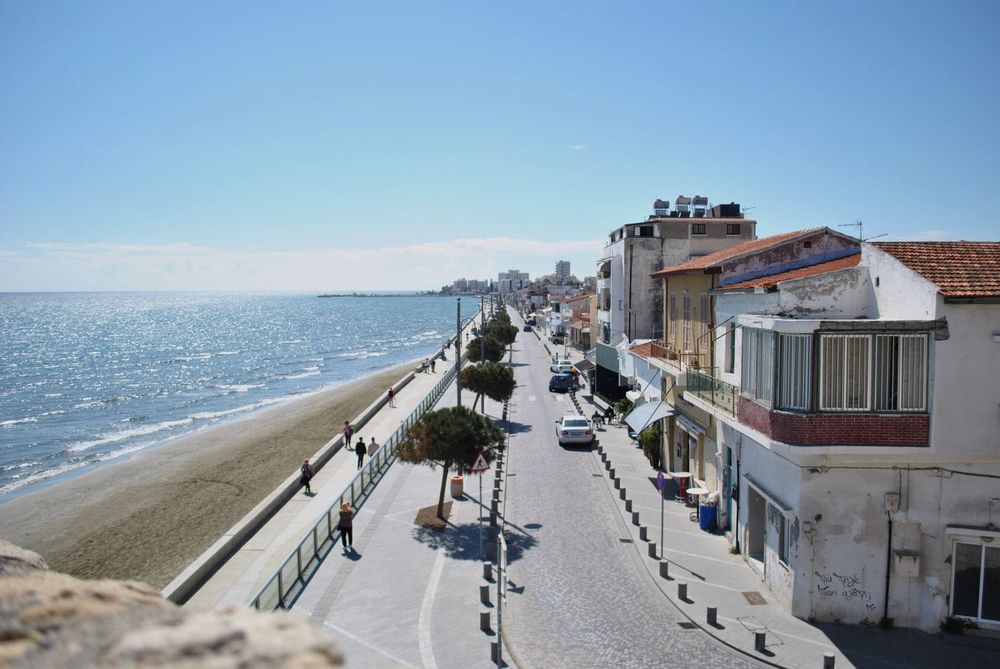
Much of the new development is concentrated along the seafront and around the marina, where Larnaca has become a focus for high-rise residential construction. Several luxury apartment towers are under construction or in planning near the coast, marketed largely at investors and second-home buyers rather than local first-time purchasers.
The anchor project is the redevelopment of Larnaca's port and marina. The Cyprus Ports Authority is overseeing a scheme estimated at around €415 million, structured as three parallel sub-projects covering the marina itself, adjacent land earmarked for mixed commercial and residential use, and modernisation of the commercial port. The works are phased over the next two decades, with a master plan targeted for completion by 2029. Supporters see a modern, competitive waterfront; critics worry about who the finished city will ultimately be built for.
The affordability squeeze
The pressure on locals is real and measurable. The median gross annual household income in Cyprus was about €30,900 in 2023, well below the euro-area median of roughly €37,100, according to figures reported by the Cyprus Mail. Younger households aged 16 to 34 earn around €24,000 a year, more than 30% below their euro-area peers, and only about 18% of them are able to save. Workers in retail, construction and hospitality earned roughly €1,400 a month in 2024, with pay rising about 5% in 2025 — slower than property prices.
With prices and rents outpacing wages, homeownership across Cyprus has drifted lower over the past decade while the share of tenants has risen, tightening the market for anyone trying to buy a first home.
What the government is doing
Cyprus has launched a series of measures aimed at affordability, though results so far are hard to track. They include:
- A "Build to Rent" scheme expected to deliver roughly 1,900 units, with a share set aside as affordable housing let at below-market rents.
- Urban planning incentives that grant developers extra building density in exchange for selling a proportion of the additional units at affordable prices.
- Grants of up to €50,000 for young families, which have been heavily oversubscribed.
- Subsidised purchase options through the state housing authority (KOAG) at a fixed price per square metre.
Whether these schemes can keep pace with a fast-moving market is the open question. Larnaca's transformation brings investment, jobs and a renewed waterfront, and its prices still start lower than Limassol's. But for a retail worker or a young family on a local wage, a sea-view apartment marketed abroad remains out of reach. The real test for the district is not whether it can build, but whether ordinary residents can still afford to live in the city it is becoming.