

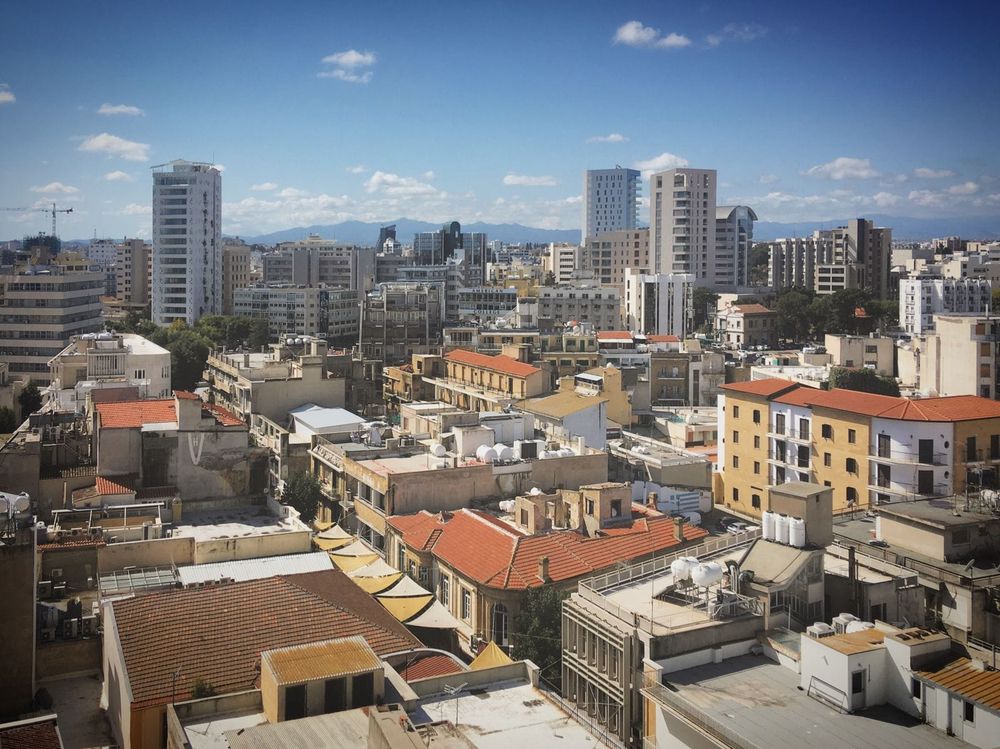
Nicosia's Construction Surge: What the Building Boom Means for Housing Affordability
Nicosia is in the middle of the most intense construction phase in its recent history. Official permit data confirm what residents can see in the cranes rising across the skyline: the capital, long overshadowed by the coastal markets of Limassol and Paphos, has become the island's fastest-growing development market. The question dominating public debate is whether this surge is easing Cyprus's housing squeeze or adding to it.
The scale of the boom
Figures compiled from Cyprus Statistical Service data show Nicosia recorded a 45 per cent year-on-year rise in licensed building area during the first ten months of 2025 — the steepest increase of any district. Across Cyprus, 6,490 building permits were issued between January and October 2025, up from 5,955 a year earlier, with their total value climbing to around €3.2 billion from €2.5 billion. Roughly 84 per cent of newly licensed developments were residential, and Nicosia's permitted building area has grown by about 68 per cent over the past five years.
Prices and rents are climbing
Supply is rising, but so are costs. Eurostat data show Cypriot house prices increased by about 6 per cent in the fourth quarter of 2025 compared with a year earlier, slightly above the EU average of 5.5 per cent. Rents rose 4.2 per cent in the year to March 2026, against 2.9 per cent across the EU. In Nicosia, average rents for a standard two-bedroom apartment now sit at around €900 a month, and rental rates in the capital have climbed by roughly a quarter over the past five years.
An affordability picture with nuance
The headline indicators remain comparatively benign. Cyprus's homeownership rate stood at 69.2 per cent in 2025, marginally above the EU average, and Cypriots spent one of the lowest shares of disposable income on housing in the bloc in 2024. But the trend is turning:
- The house price-to-income ratio edged up in 2024, even as it fell across most of the EU.
- Rent or mortgage arrears affect a larger share of households in Cyprus than the EU average.
- The pressure falls hardest on younger and first-time renters trying to enter the market.
Analysts point to the conversion of long-term lets into short-term holiday rentals as one driver of the squeeze. Much of the debate now centres on whether the market is delivering the right kind of housing — affordable, long-term rental stock — rather than simply more of it.
The high-rise question
The boom has also reopened a fight over how the capital should grow. A proposal for a tower of around 25 storeys near Famagusta Gate — a designated archaeological site on the edge of the Venetian walls — has drawn strong objections from the antiquities department and the Cyprus Association of Archaeologists, who warn it would degrade the medieval character of the old town. The zoning limit in the area is eight storeys; the developer had earlier sought 36. The decision rests with the Nicosia District Local Government Organisation, while the antiquities department retains the power to block work affecting protected sites. The dispute captures a wider tension between investment-led high-rise development and preservation of Nicosia's historic core.
For now, the figures point to a market building at pace and heavily skewed towards residential projects. Whether that translates into genuine relief for households — or simply a taller, more expensive city — will depend on the mix of homes delivered and how firmly planning rules are applied.