

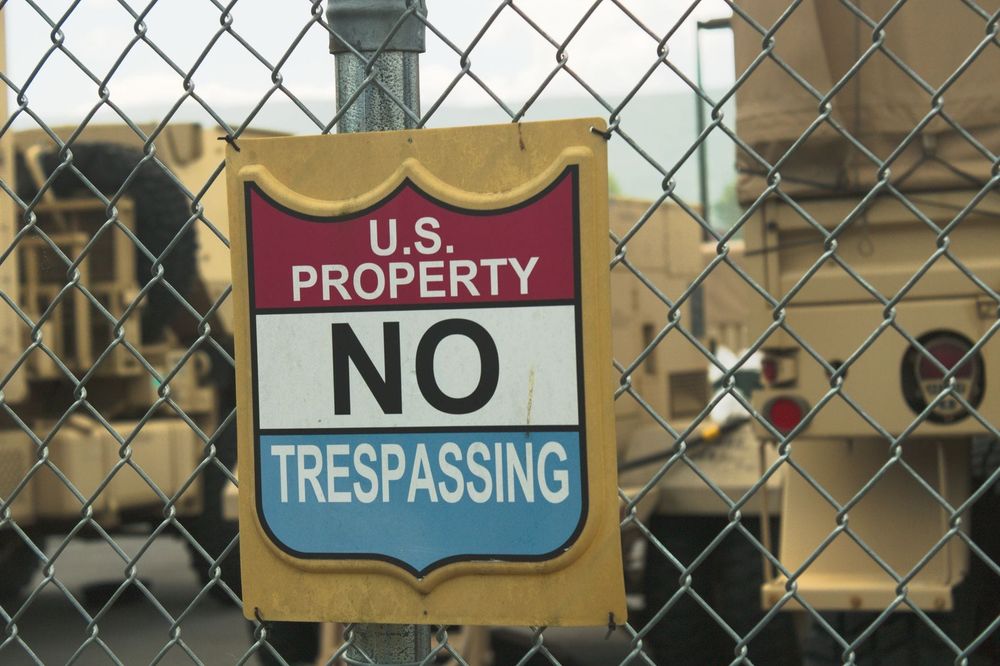
The US Air Base Arrests Prove Cyprus Is Tangled in a Greater Geopolitical Wire
The US Air Base Arrests Prove Cyprus Is Tangled in a Greater Geopolitical Wire
For years, official Nicosia has preferred a diplomatic sleight of hand when discussing the island's strategic utility to foreign militaries. We are told to view ourselves as a beacon of stability, a humanitarian bridge, a neutral hub minding its own corner of the Eastern Mediterranean. But major international events have a habit of puncturing diplomatic fantasies.
The recent major security incident involving the arrest of five men near a military airfield utilized for strikes on Iran strips away any lingering illusions. While the immediate arrests and counter-terrorism investigations played out abroad—with British police arresting five suspects on suspicion of explosive and terrorism offences after a tip-off concerning three suspicious vans heading toward the facility—the shockwaves reverberate straight back to Cyprus.
Let's not indulge in convenient amnesia. Whenever foreign powers utilize regional airfields and military infrastructure to project power into volatile flashpoints like Iran, they do not operate in a vacuum. They drag the entire geographic neighbourhood deeper into the line of fire.
Consider the stark realities laid bare by the incident:
- Counter-terrorism detectives launched a high-stakes investigation following intelligence regarding multiple suspicious vehicles approaching a sensitive military airfield.
- The targeted facility is explicitly tied to long-range operations and strikes against Iran.
- The arrests under terrorism and explosives acts instantly trigger heightened threat levels across allied military nodes throughout the wider region.
Cyprus sits uncomfortably at the receiving end of these cascading geopolitical tensions. Our geographic proximity to the Middle East means we are never truly insulated from the blowback of offensive military campaigns. When foreign air bases are targeted by thwarted plots or become epicentres of counter-terrorism operations, the security perimeter around *all* Western-linked installations in the region tightens defensively—and nervously.
For too long, political leaders have danced around the implications of turning the island into a logistical staging ground for foreign powers. They treat foreign military movements as isolated administrative events rather than what they genuinely are: profound commitments to aggressive foreign policies that put civilian populations on high alert.
You cannot play a pivotal role in projecting military force into Middle Eastern warzones without inheriting the security risks that follow. The arrests near the military airfield serve as a blunt warning. The wire is live, and Cyprus is tangled dead in the middle of it. It is well past time for our leaders to stop pretending we are merely observers to a storm we are actively helping to funnel.