

Turkish Cypriot Fuel Strike: Is 'No Need to Worry' a Reckless Dismissal of Reality?
Turkish Cypriot Fuel Strike: Is 'No Need to Worry' a Reckless Dismissal of Reality?
Optimism is a commendable trait, but in the face of an indefinite strike by workers at the Turkish Cypriot community's largest fuel supplier, Cyprus Turkish Petroleum (K-Pet), assurances of "no need to worry" about shortages ring alarmingly hollow. Turkish Cypriot petrol station owners’ association chairman Levent Cagdal’s statement on Wednesday, just a day after the strike was announced, suggests a disconnect between official reassurances and the immediate, tangible risks.
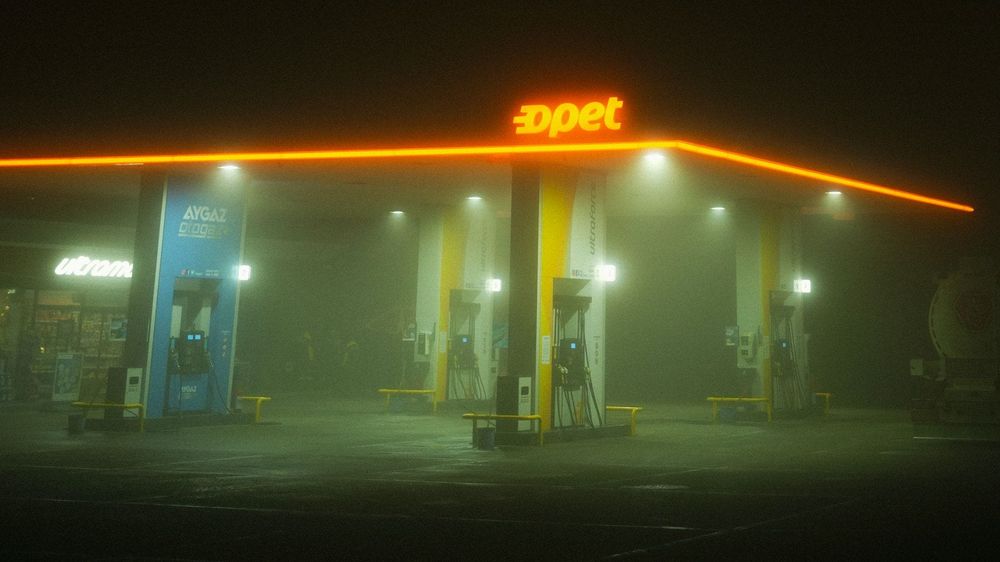
Let's be clear about the scale of the operation at stake. K-Pet is not just any supplier; it is the dominant force in the Turkish Cypriot fuel market. Its Kalecik facility alone boasts a total capacity of 74,444m³, including 14 fuel tanks for various grades of petrol, diesel, and jet fuel, alongside three LPG tanks. Furthermore, K-Pet operates an Air Supply Unit at Ercan Airport, underscoring its critical role across vital sectors. This is the company that has previously provided crucial fuel support for firefighting helicopters and emergency vehicles, highlighting its integral position in the community's infrastructure.
With such a behemoth on strike, how can "no need to worry" be anything but a hasty, perhaps even reckless, dismissal of reality? The indefinite strike, initiated by the Kıbrıs Türk Petrol İşçileri Sendikası over the dismissal of nine employees, has had an immediate and severe operational impact. Reports indicate that fuel shipments to K-Pet stations have already ceased, with tanker drivers left stranded and unable to collect fuel from the Kalecik Dolum Tesisleri. This isn't a future problem; it's a present reality where the very arteries of fuel distribution are being choked off.
While Mr Cagdal might point to existing fuel stocks, such assurances only hold water for a finite period. An "indefinite" strike carries inherent uncertainty and the very real threat of depletion. History, too, offers a stark warning. As recently as 2021, when both K-Pet and Alpet announced they would stop selling fuel due to operating losses, queues rapidly formed at petrol stations across the north. This precedent demonstrates just how quickly the supply chain can buckle and public anxiety can mount when major players in the fuel market halt operations. To suggest that a strike at the *largest* supplier, leading to an immediate halt in shipments, won't eventually lead to similar or worse outcomes seems, frankly, naive.
Fuel prices in the north are centrally set, with K-Pet and Alpet representatives on the commission that determines them. This interwoven structure means that disruptions at a company like K-Pet have wider implications for the entire system. While initial stock levels might offer a temporary buffer, the immediate cessation of supply from the primary source fundamentally undermines any long-term stability. The question isn't whether there's fuel *today*, but whether the system can sustain itself *tomorrow* and the day after without its main engine running.
To declare "no need to worry" when shipments have stopped and tankers are idle at the gates of the community's largest fuel provider feels less like reassurance and more like an attempt to gloss over a developing crisis. The reality on the ground, as reported, paints a far more precarious picture than the official optimism suggests. For the people of the Turkish Cypriot community, a more transparent and realistic assessment of the situation, rather than a simplistic dismissal, would surely be more prudent.